A Special Visit to Washington, D.C.
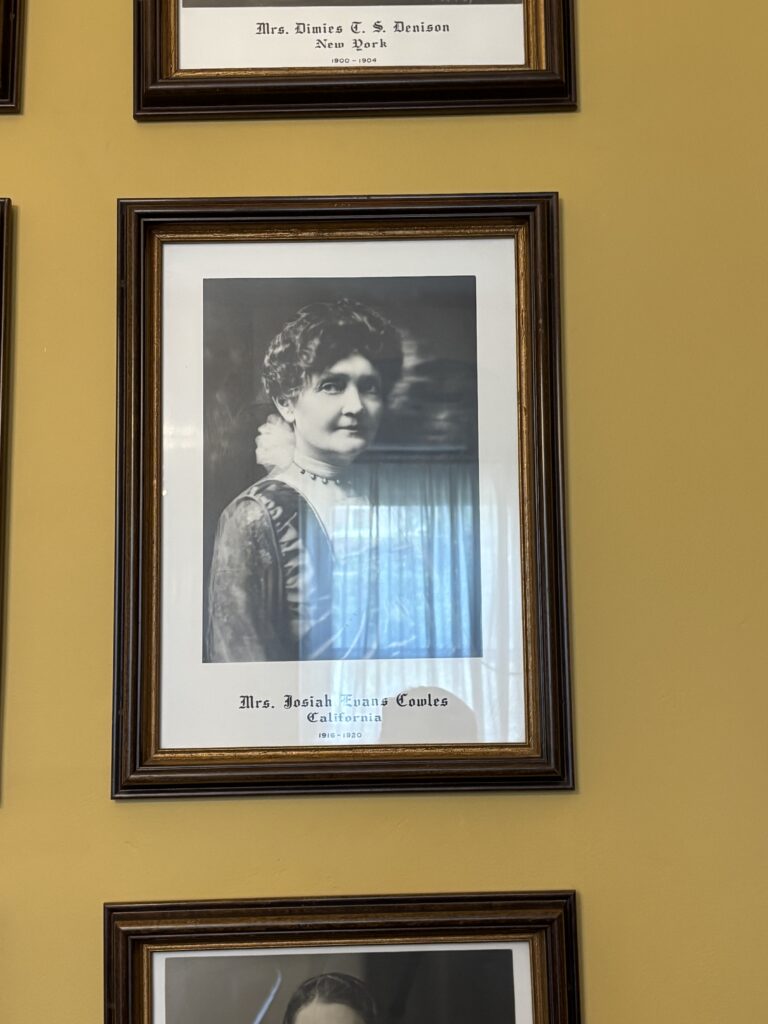
I recently had the opportunity to visit the General Federation of Women’s Clubs (GFWC) Headquarters in Washington, D.C. Joanna Church, a Women’s History and Resource Center (WHRC) librarian, gave me a personal tour of the houses that make up the headquarters. In her role as the WHRC librarian, she had in depth knowledge of the founding of the GFWC and the amazing women that have taken leadership roles in the organization that has connected women’s clubs across the country and around the world for more than 135 years.
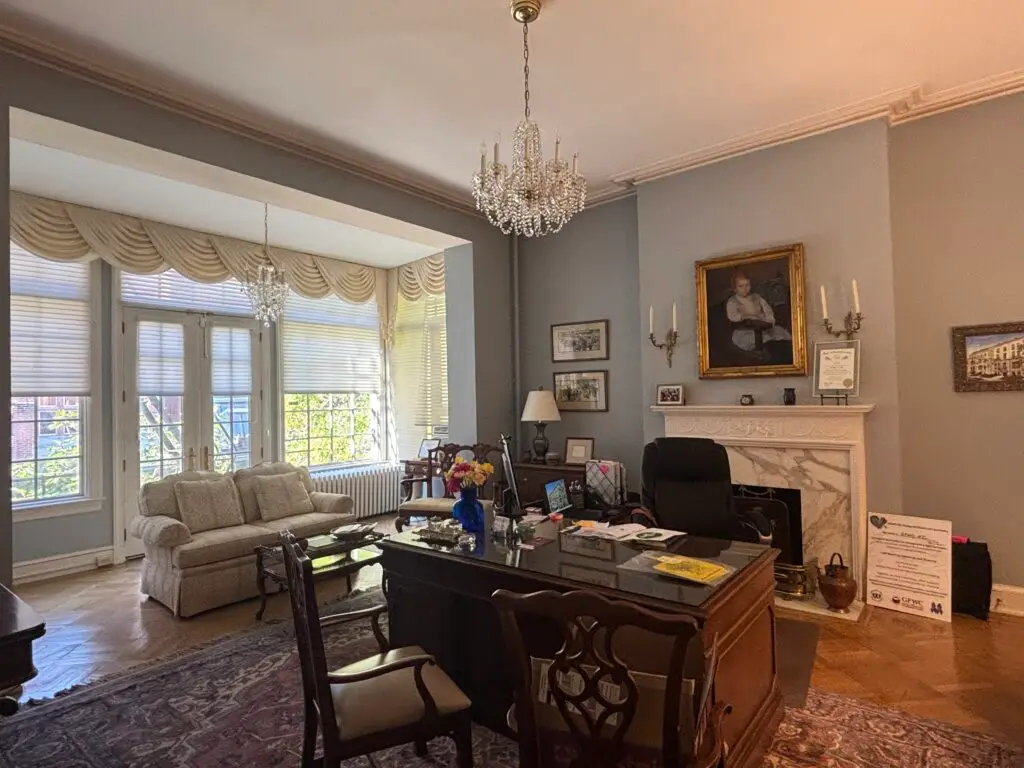
Some of the rooms were not accessible as the GFWC Executive Board were having an on site meeting. I met Jolie Frankfurter, the 2026-2028 GFWC President-elect, and many of the staff who were preparing for the meeting. It was interesting to learn that all the women who provided housekeeping and cooking services are Club members who volunteer to work at headquarters. I had a peek at the President’s office. The President has an apartment on the 4th Floor when she lives for her term of office.
A House With Its Own Story
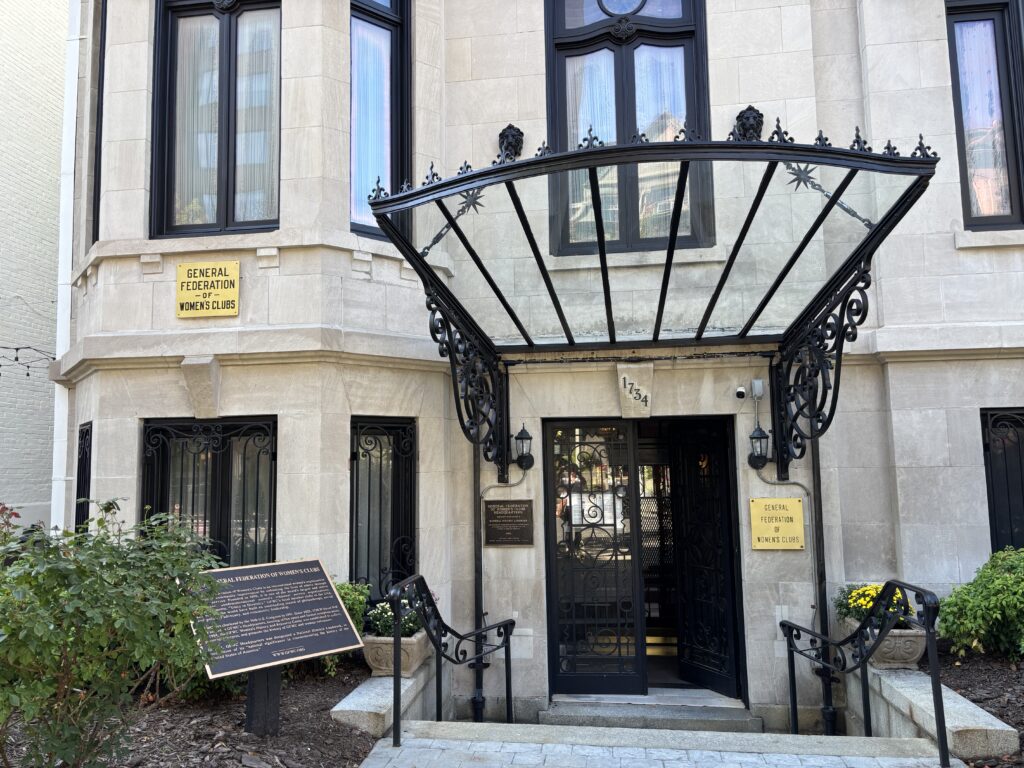
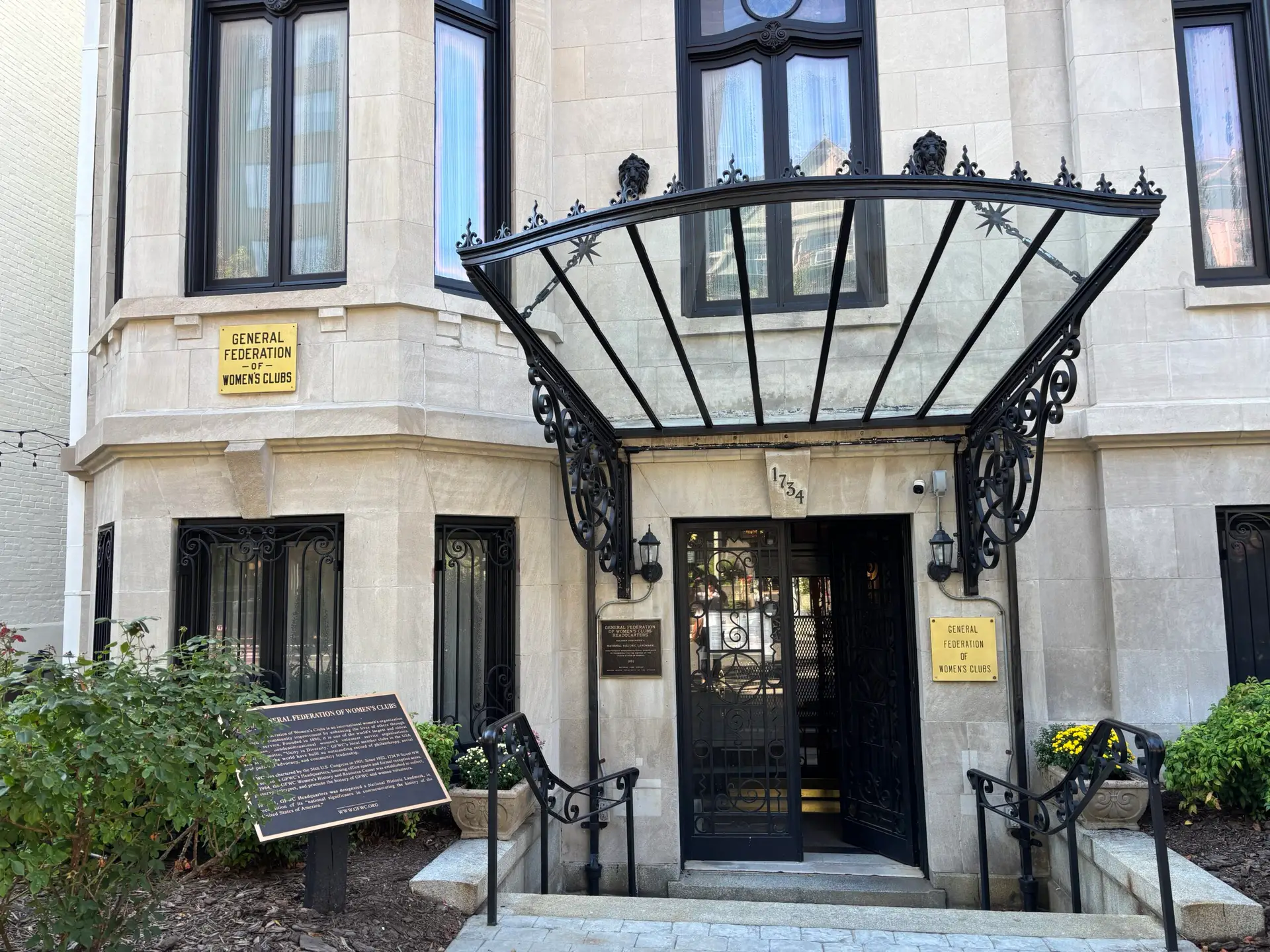
Located at 1734 N Street NW, just south of Dupont Circle, GFWC Headquarters is a National Historic Landmark and has served as the Federation’s home for more than a century.
The central building at 1734 N Street was constructed in 1875 by Rear Admiral William Radford for his family. At the time, the Dupont Circle neighborhood was a fashionable residential area of Washington, D.C., and the home reflected the elegance of the period.
The house eventually became home to the General Federation of Women’s Clubs. GFWC purchased 1734 N Street in 1922, establishing a permanent headquarters for the growing organization. In the 1950s, GFWC expanded its headquarters by acquiring two neighboring 19th-century rowhouses at 1728 and 1738 N Street. Today, the three buildings are connected and function as one headquarters complex.
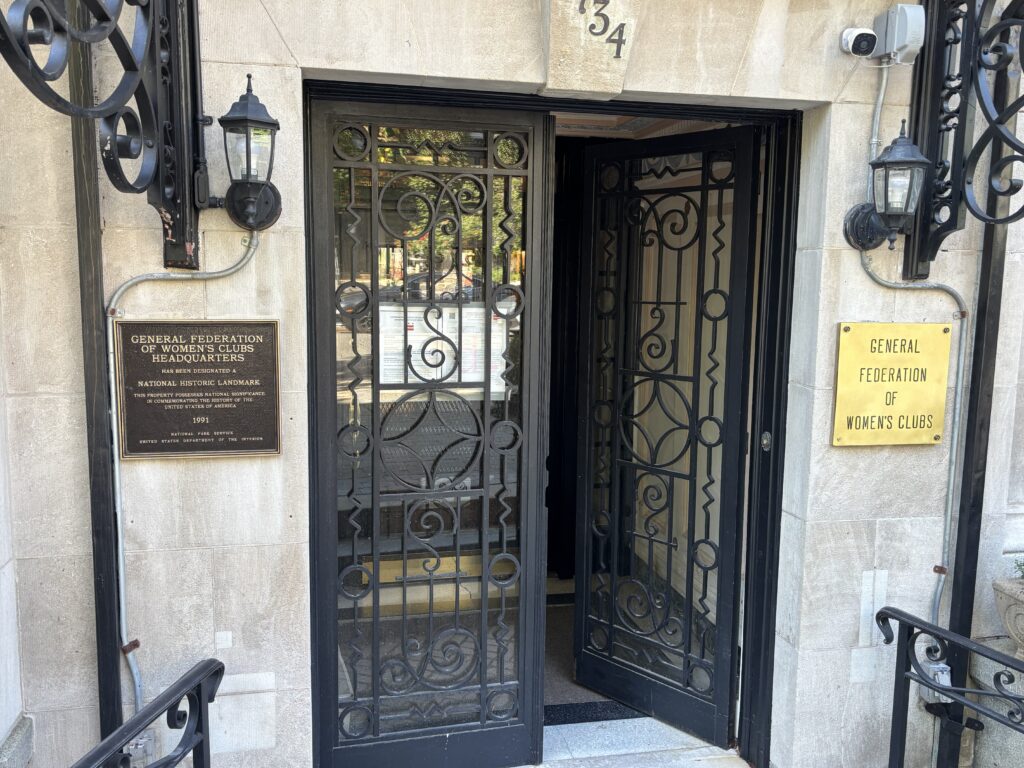
In 1991, 1734 N Street was designated a National Historic Landmark, recognizing its importance to American history.
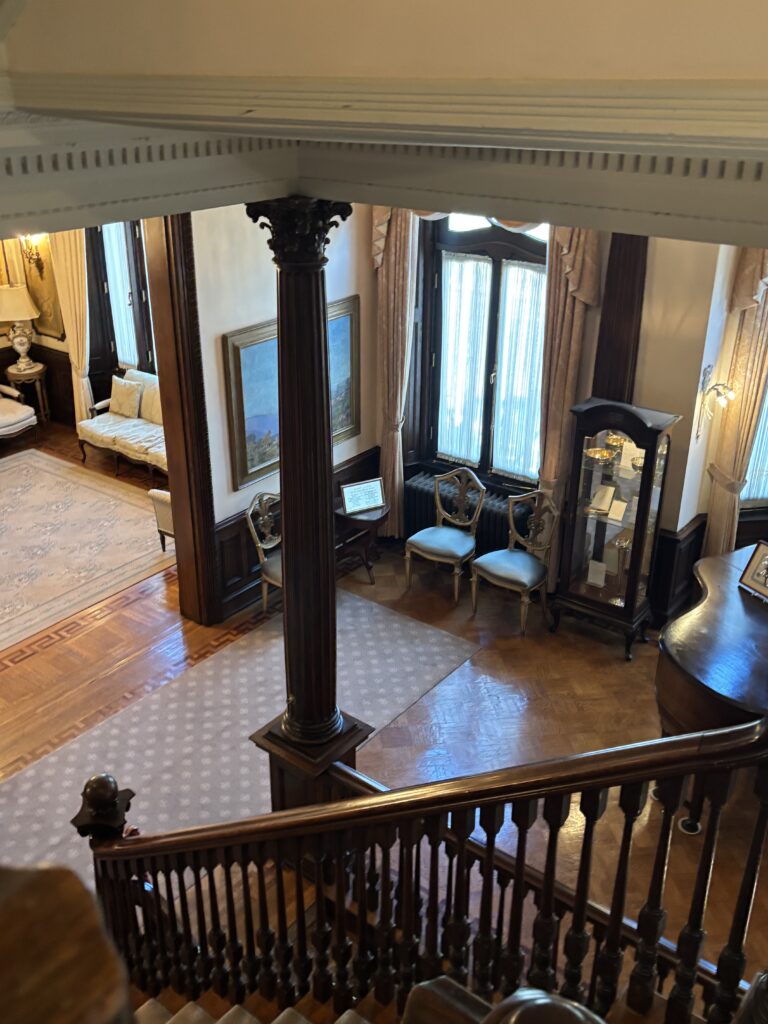
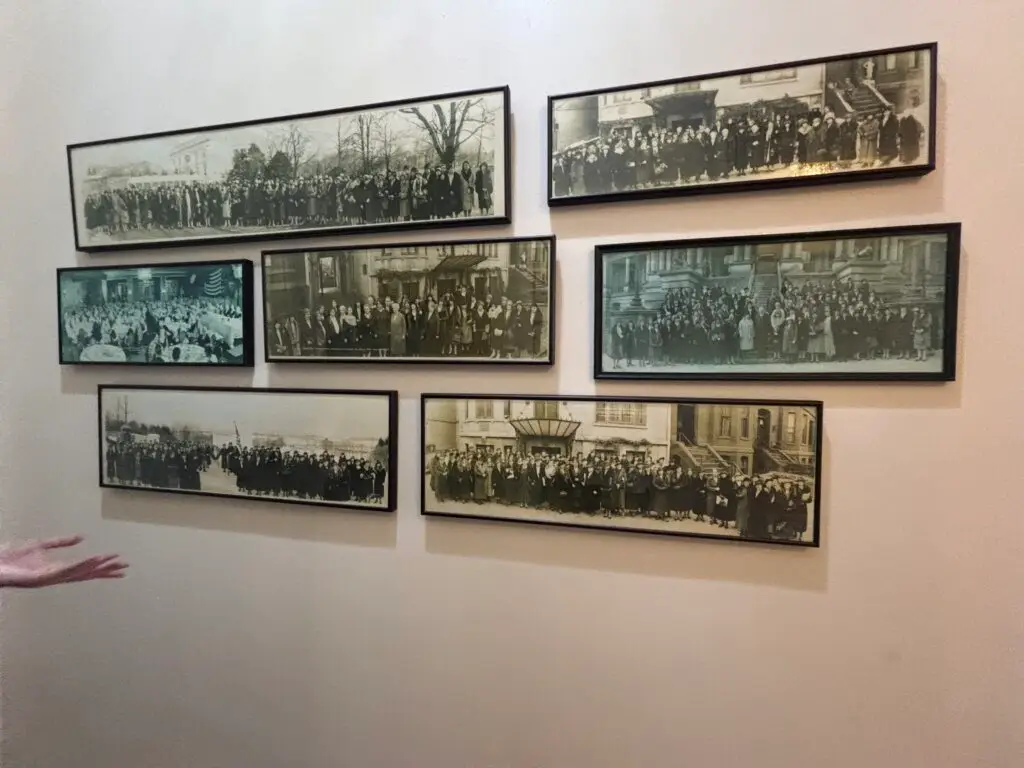
Walking through the headquarters gives visitors a sense of the generations of women who have passed through its doors. The building is not simply an office. It is a place where the history of women’s volunteer organizations has been preserved and continues to be lived.
The Birth of the General Federation of Women’s Clubs
The history of the building is intertwined with the history of GFWC itself.
The General Federation of Women’s Clubs was founded on April 24, 1890, when the GFWC Constitution was ratified and 63 clubs officially formed the Federation.
The organization grew out of the rapidly expanding women’s club movement of the late 19th century. Women were creating clubs where they could learn, exchange ideas, develop leadership skills, and work together to address issues affecting their communities.
According to GFWC, the Federation was created to support women’s clubs throughout the country and to help advance efforts involving education, improved working conditions, health care, scholarships, and reforms benefiting women and children.
What began as a federation of clubs became a national and international network of women committed to volunteer service.
Today, GFWC reports approximately 60,000 members nationwide, including the District of Columbia, and in 12 countries around the world.
A Legacy of Women Making a Difference
One of the most meaningful aspects of the visit was seeing how the history of GFWC connects with the work of local clubs.
The women who formed clubs more than a century ago often began with relatively simple goals: study together, improve their communities, support education, and address problems they saw around them. Over time, those efforts became important forces for community improvement and social change.
GFWC’s own historical materials note that many early women’s clubs began as organizations focused on study and social activities, but they soon moved toward community action and improvement.
That evolution is familiar to the La Mesa Woman’s Club.
Since its founding in 1902, the La Mesa Woman’s Club has continued the tradition of women coming together to support education, community programs, philanthropy, and the quality of life in La Mesa.
Preserving the Stories of Women
Another important part of GFWC Headquarters is the Women’s History and Resource Center (WHRC).
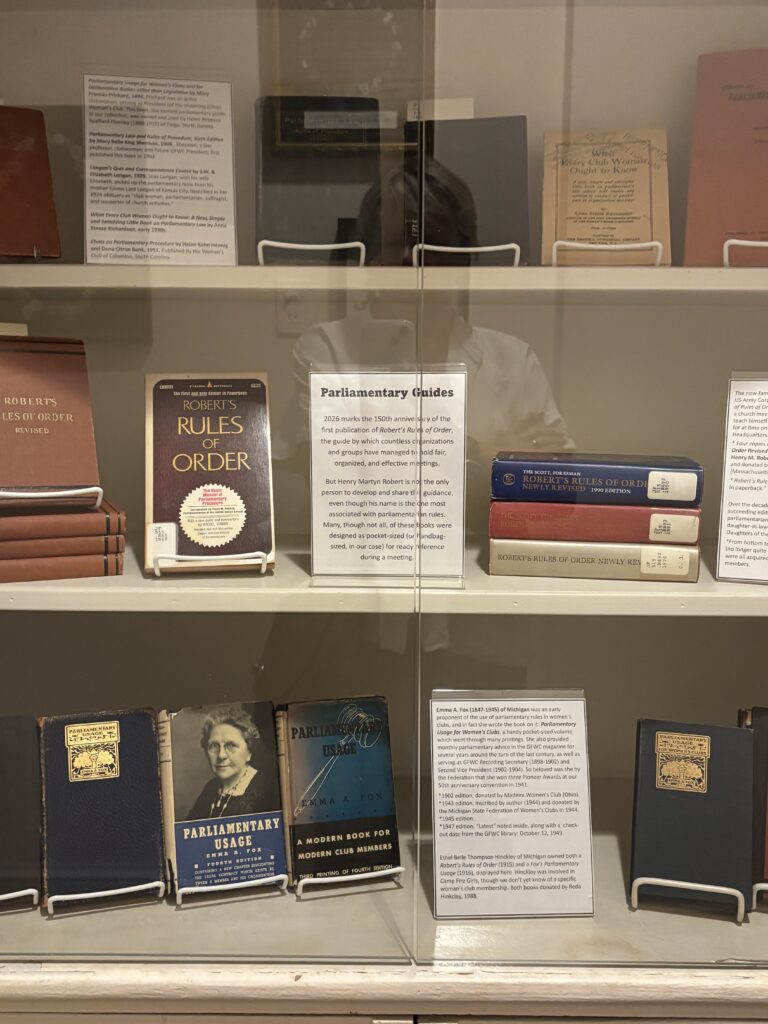
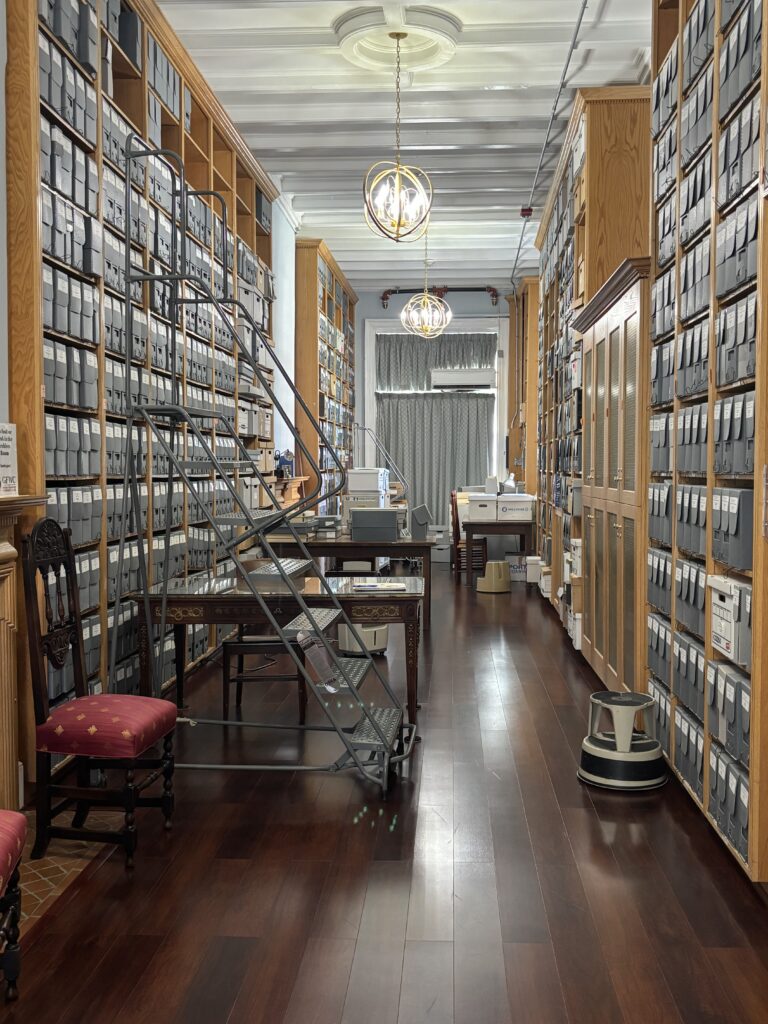
GFWC has been collecting organizational archives—including papers, photographs, artwork, and memorabilia—since its founding in 1890. These materials provide a remarkable record of the women’s club movement and the women who built it.
The WHRC is more than a collection of old documents. It helps ensure that the contributions of generations of clubwomen are remembered.
A 1928 photograph preserved by the WHRC, for example, shows GFWC staff working in the headquarters’ “Long Office.” That same 60-foot-long room has served as the Archives since the 1980s.
Standing in a building where so much of women’s organizational history has been preserved makes the importance of our own local history even more apparent.
A Continuing Connection
For members of the La Mesa Woman’s Club, visiting GFWC Headquarters was a reminder that our Club is part of something much larger.
The name General Federation of Women’s Clubs represents a network of women’s clubs connected by a common commitment to volunteer service. Each local club has its own history, traditions, community partnerships, and accomplishments—but together, these clubs form a remarkable legacy.
The GFWC Headquarters itself represents that continuity. The 1875 home has been carefully maintained and adapted for modern use while preserving important historic features. GFWC’s recent preservation work recognizes that caring for the buildings is also a way of protecting the history contained within them.
Taking the History Home
As I left GFWC Headquarters, I had renewed appreciation for the women who came before us, the clubs they created, and the communities they changed through volunteer service.
For the La Mesa Woman’s Club, the visit was also an invitation to think about our own legacy.
What stories will future generations tell about the women of the La Mesa Woman’s Club?
What community improvements will they remember?
And what will we do today to ensure that the tradition of women working together to make a difference continues for another generation?